
Understanding Your Eye Glass Prescription
Navigating the world of eyecare can sometimes feel like trying to understand a foreign language, especially when it comes to your eyeglass prescription. At eyeXam, we believe in empowering our patients with knowledge, making it easier for you to understand your vision needs and make informed decisions about your eyewear. This detailed guide aims to demystify the numbers and symbols on your prescription, ensuring you know exactly what they mean for your vision correction.
The Basics of an Eyeglass Prescription
An eyeglass prescription is a unique set of parameters determined by your optometrist that specifies the correction needed for your vision. It might seem like a complex mix of numbers and abbreviations, but each part has a specific meaning related to your eye health and how your eyeglasses should be crafted to correct your vision.
Understanding the Key Components
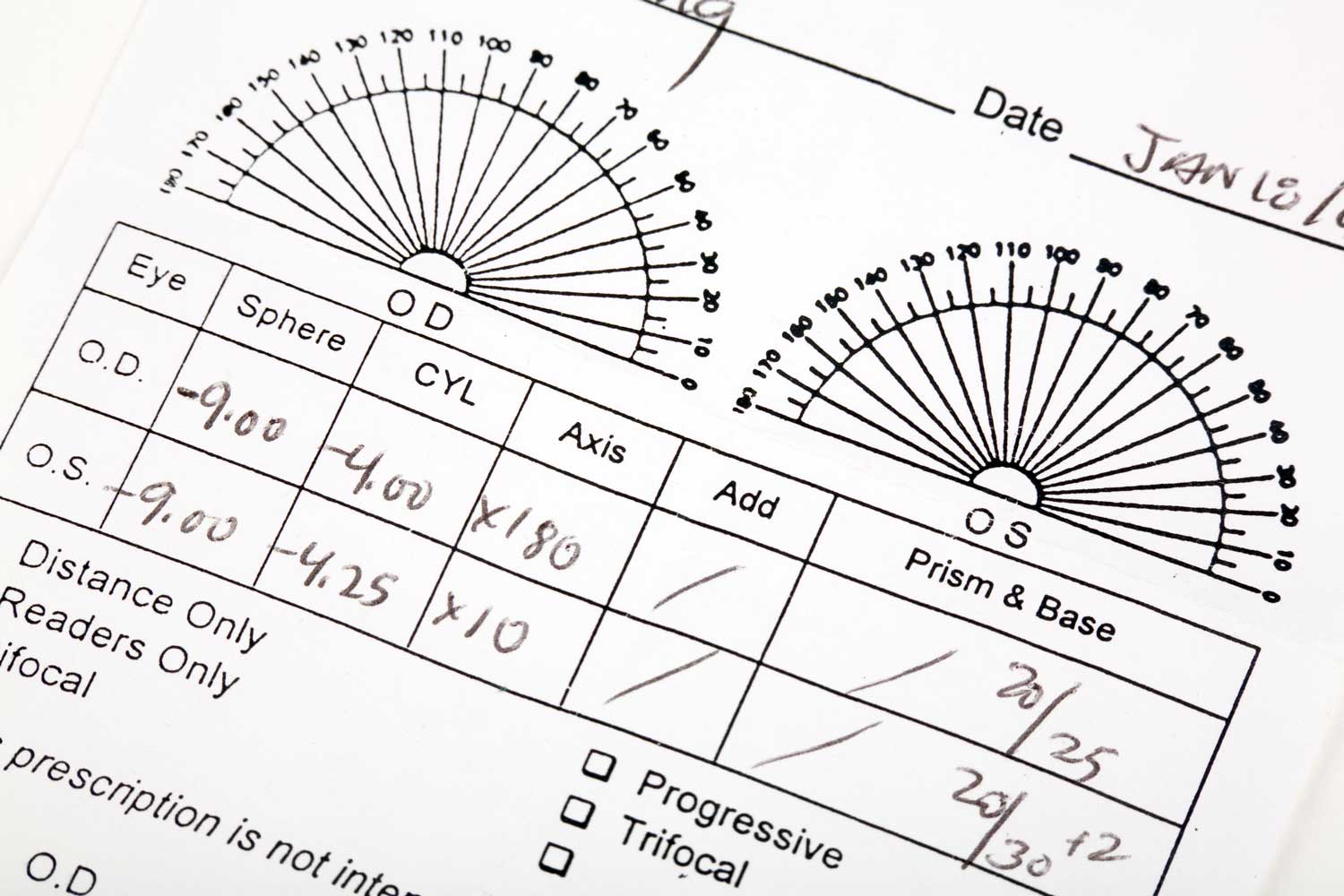
- Sphere (SPH): This number indicates the power of the lens required to correct your vision. Measured in diopters, it shows whether you are nearsighted (-) or farsighted (+). The higher the number, the stronger the prescription lens needed.
- Cylinder (CYL) & Axis: These values pertain to astigmatism correction. CYL indicates the lens power needed to correct the astigmatism, while the Axis number (ranging from 0 to 180 degrees) specifies the orientation of the astigmatism in your eye.
- Add: This number is relevant for bifocal or multifocal lenses, signifying the additional magnifying power needed at the bottom part of the lens for reading or close work.
- Pupillary Distance (PD): PD measures the space between the centers of your pupils in millimeters, ensuring that the lenses are correctly aligned with your eyes for optimal focus.
Decoding the Prescription: A Step-by-Step Guide
- Sphere (SPH): Look for the “SPH” abbreviation. If you see a plus sign (+), you have hyperopia, meaning you see well at a distance but have difficulty with close-up tasks. A minus sign (-) indicates myopia, where near objects are clear, but distant ones are blurry.
- Cylinder (CYL) and Axis: Not everyone will have values here, as they only apply if you have astigmatism. A nonzero CYL number means you have astigmatism, requiring correction for distorted or blurred vision at all distances. The Axis value will tell the lens maker at what angle the correction should be applied.
- Add Power: This section is particularly crucial for those over 40 who might be experiencing presbyopia, the age-related difficulty in focusing on close objects. The “Add” value represents the extra magnification needed to assist with reading or other close-up activities.
- Prism: Although less common, some prescriptions include prism correction to help with alignment issues for those who have binocular vision problems, reducing double vision or eye strain.
- Pupillary Distance (PD): This measurement might not always be on your prescription, but it’s vital for ensuring your glasses fit perfectly. If it’s missing, eyeXam can measure it for you during your fitting.
Why Precision Matters
Getting every detail of your prescription right is crucial for your comfort and vision clarity. Incorrect or outdated prescriptions can lead to headaches, eye strain, and blurred vision, significantly impacting your daily life. That’s why at eyeXam, we emphasize the importance of regular eye exams and precision in every prescription we issue.
Tips for Reading Your Prescription
- Always ask questions: If any part of your prescription is unclear, don’t hesitate to ask your optometrist for an explanation. Understanding your prescription can help you make better choices about your eyewear.
- Keep it updated: Vision can change over time, so it’s essential to have your eyes checked regularly and keep your prescription up to date.
- Know your rights: Remember, your eyeglass prescription is yours to keep. You’re entitled to a copy of it after your eye exam, allowing you to shop for eyewear anywhere you choose.
How eyeXam Can Help
At eyeXam, we’re dedicated to providing personalized care and educating our patients about their eye health. Our team of experienced optometrists uses the latest technology to ensure accurate prescriptions and answers all your questions about your vision correction needs.
Choosing the right eyewear goes beyond just style; it’s about comfort, functionality, and, most importantly, your health. By understanding your eyeglass prescription, you’re taking an important step towards optimal eye health and vision quality. Visit eyeXam for your next eye exam, and experience the difference that clarity and knowledge can make in your vision and life.
Remember, your prescription is a key to better vision. Understanding it is the first step in ensuring your eyewear not only corrects your vision but also supports your overall eye health. At eyeXam, we’re here to guide you through every step of that journey, providing expert care and advice tailored to your unique vision needs.